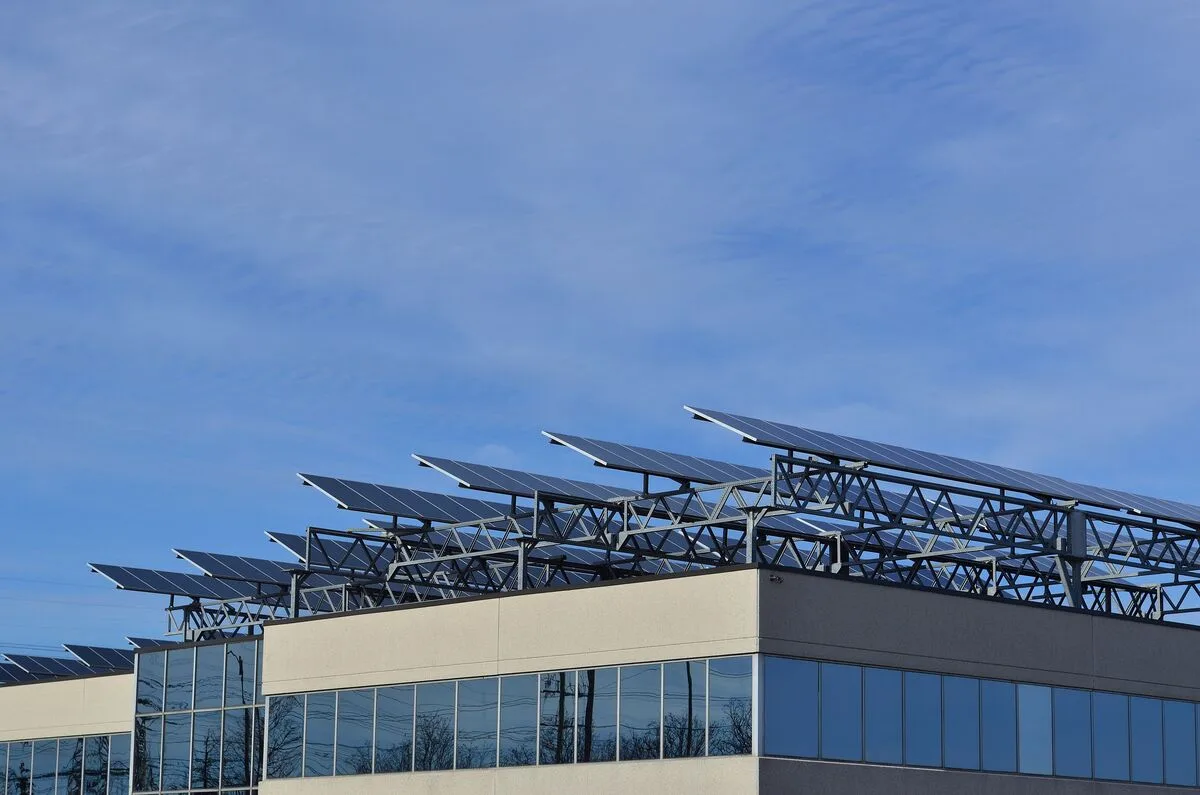
Rooftop on Buildings
Panel layout, string and inverter design, DC and AC cable sizing, protection and isolation, and the connection into the existing installation — with the DNO application under EREC G98 or G99.
Rooftop systems on commercial buildings, ground-mounted solar farms and solar with battery storage — energy yield, electrical design, earthing and the DNO connection.
Panel layout, string and inverter design, DC and AC cable sizing, protection and isolation, and the connection into the existing installation — with the DNO application under EREC G98 or G99.
Array and inverter design, the MV collection network, cable sizing, protection settings, and the earthing study for the site, its substation and the grid connection.
Battery sizing and integration, export limits under EREC G100, protection and earthing for the storage system, and peak shaving to stay within the agreed supply capacity.
We model the system in PVsyst — the site's weather data, orientation, shading and losses — to give the expected annual energy. The yield report supports the business case and the funding decision.
We size strings and inverters, DC and AC cables, protection and isolation to BS 7671 Section 712 and IEC 62548-1, and model the AC network in ProDesign, ETAP or PowerFactory — fault levels, voltage rise and protection settings. Surge protection is selected to BS 7671.
For solar farms and battery sites we model the earthing in SES CDEGS: earth potential rise, touch and step voltages, and whether the site is classed as "hot", to BS EN 50522 and ENA TS 41-24.
We prepare the technical information for the DNO application under EREC G98 or G99, set the interface protection, and design export limitation under EREC G100 where the network cannot take the full export.


Not sure the site can take it? Start with an electrical feasibility study. For the earthing method, see our earthing study design service.
Common questions about solar PV and battery design.
PVsyst for energy yield; ProDesign, ETAP or PowerFactory for the electrical network and protection; SES CDEGS for earthing studies; and AutoCAD for drawings.
EREC G98 covers fully type-tested generation of up to 16 A per phase in total at a premises, counting all generation and storage there, including anything already installed. At a single premises it is installed first and the DNO is notified within 28 days; several premises close together need the DNO's agreement before installation. Larger systems need an application and the DNO's acceptance under EREC G99 before they connect.
When the local network cannot take your full output, the DNO may agree a connection with an export limit. EREC G100 sets how the export limitation scheme must work; we design the scheme and its settings.
Usually, yes. The DNO needs evidence that the earth potential rise and the touch and step voltages are safe at the substation and across the site under ENA TS 41-24. We model it in SES CDEGS from a soil resistivity survey.
Yes. We size the battery, check the existing installation and protection, and design the export limits and earthing for the new storage.
Yes. We review solar and battery designs against BS 7671, the IET codes of practice and the DNO's requirements, and report what needs to change.